

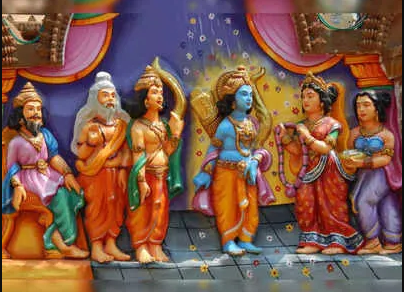
Every year, the sacred city of Janakpur transforms into a celestial wedding venue, celebrating one of the most revered events in Hindu mythology: the divine marriage of Lord Ram and Goddess Sita. Vivah Panchami is not just a festival; it's a spiritual immersion that draws hundreds of thousands of pilgrims from Nepal, India, Mauritius, Fiji, and Hindu communities worldwide.
Suppose you're planning to witness this extraordinary celebration. In that case, this comprehensive guide covers everything you need to know, from the ancient mythology and sacred rituals to practical travel tips and accommodation near Janaki Mandir.
| Detail | Information |
| What is it? | Celebration of Lord Ram and Goddess Sita's divine wedding |
| When? | Margashirsha Shukla Panchami (5th day of the bright fortnight) |
| Vivah Panchami 2026 Date | Tuesday, December 16, 2026 |
| Location | Janaki Mandir, Janakpur, Nepal |
| Significance | Reenactment of the sacred marriage as described in the Ramayana |
| Expected Attendance | 300,000–400,000 pilgrims |
| Best Time to Arrive | 2–3 days before the main ceremony |
| Festival Duration | Week-long celebrations with the main event on Panchami |
Vivah Panchami is a Hindu festival commemorating the sacred marriage of Lord Ram, the Prince of Ayodhya, and Goddess Sita, the Princess of Mithila. Celebrated on the fifth day of the bright fortnight in the month of Margashirsha (November-December), this festival holds profound spiritual and cultural significance in the Mithila region.
Janakpur serves as the epicenter of Vivah Panchami celebrations because it is believed to be the birthplace of Goddess Sita and the actual location where the divine wedding took place thousands of years ago. While Ram Navami celebrates Lord Ram's birth, Vivah Panchami honors the sacred union that symbolizes dharma, devotion, and cosmic balance.
The celebration is spiritual, cultural, and deeply symbolic, representing the ideal marriage based on virtue, strength, and mutual respect.
The story begins with King Janak of Mithila, the wise and virtuous ruler of ancient Janakpur. During a sacred ploughing ceremony conducted to invoke rain and prosperity, King Janak discovered a golden baby girl in a furrow of the earth. Believing her to be a divine gift, he adopted her as his daughter and named her Sita, meaning "furrow."
Sita grew into a woman of extraordinary beauty, wisdom, and virtue, embodying all the qualities of an ideal princess.
When Sita reached marriageable age, King Janak faced a dilemma on how to find a worthy husband for his divine daughter. He decided to hold a swayamvar, setting an extraordinary condition: only the man who could lift, string, and break Lord Shiva's celestial bow (Pinaka) would win Sita's hand in marriage.
The bow was immensely heavy and powerful, said to possess divine energy. Many princes, warriors, and kings from across the land attempted the challenge, but none could even lift the bow from its resting place.
Prince Ram of Ayodhya arrived in Mithila with his guru, Sage Vishwamitra, and his brother Lakshman. When Ram approached the bow, he lifted it effortlessly, strung it with ease, and, while testing its strength, broke it into two pieces with a thunderous sound that echoed across Mithila.
This act demonstrated not just physical strength but Ram's divine nature, purity, and adherence to dharma. King Janak, overwhelmed with joy, declared Ram the rightful husband of Sita.
The wedding ceremony that followed was magnificent. According to the Ramayana and local folklore, the entire kingdom of Mithila celebrated with music, dance, and elaborate rituals. The sacred fire was lit, mantras were chanted, and Ram and Sita took their vows in the presence of gods, sages, and royal families from Ayodhya and Mithila.
This divine union represents the perfect marriage. It was one founded on mutual respect, dharma, and a shared spiritual purpose. It continues to inspire millions of devotees to this day.
The highlight of Vivah Panchami is the elaborate reenactment of Ram's wedding procession. Actors dressed as Lord Ram, Lakshman, King Dashrath, Sage Vishwamitra, and other members of the Ayodhya royal family participate in a grand baraat that travels through the streets of Janakpur.
The procession from Ayodhya meets another procession representing King Janak's side at Barha Bigha Rangabhoomi ground, creating a spectacular convergence of devotion, tradition, and celebration. Thousands of pilgrims join the march, accompanied by traditional horses, decorated chariots, drums, and devotional music echoing through the city.
At the heart of Janakpur stands the magnificent Janaki Mandir, where the main marriage ceremony takes place. The temple becomes a hub of spiritual energy during Vivah Panchami:
Panchamrit Puja: Special offerings of milk, curd, honey, ghee, and sugar are made to the deities
Wedding Ceremony Reenactment: Priests perform the complete marriage ritual following ancient Vedic traditions
Ram Kalewa Tradition: Distribution of blessed food items, including sweets, vegetables, grains, curd, and ghee to devotees
Continuous Chanting: Ramayana recitations and devotional hymns fill the temple courtyard
The temple courtyard accommodates thousands of devotees, but arriving early in the morning ensures a better vantage point for witnessing the ceremonies.
During Vivah Panchami, Janaki Mandir is transformed into a breathtaking spectacle. The entire temple complex glows with thousands of oil lamps, electric lights, and colorful decorations. Intricate rangoli patterns cover the courtyard, fresh flower garlands drape every pillar, and traditional Mithila art displays add cultural richness to the celebration.
The streets surrounding the temple are decorated with colorful flags, banners depicting scenes from the Ramayana, and elaborate lighting that makes evening strolls through Janakpur feel like stepping back into an ancient era.
Vivah Panchami is as much a cultural festival as it is a religious one. Throughout the week, various programs showcase the rich heritage of Mithila culture:
Ramayana Recitals: Professional storytellers and scholars narrate episodes from the epic
Mithila Dance Performances: Traditional folk dances unique to the region
Devotional Music: Bhajans, kirtans, and classical music performances dedicated to Ram and Sita
Theater Productions: Dramatic reenactments of key scenes from the Ramayana
These programs take place at multiple venues around Janakpur, offering visitors a complete immersion in Mithila's living cultural traditions.
Vivah Panchami brings Janakpur's streets alive with temporary food stalls and markets. Pilgrims can enjoy authentic Mithila cuisine, including:
Puri and Tarkari: Traditional breakfast served at roadside stalls
Mithai: Special sweets like peda, jalebi, and barfi are prepared for the festival
Street Tea: Authentic chai served in clay cups
Mithila Thali: Complete traditional meals at local restaurants
Festival markets sell handmade Mithila art, religious souvenirs, traditional clothing, and local handicrafts, which are perfect for taking home a piece of this sacred celebration.
Understanding the typical daily schedule helps you plan your visit and avoid the most crowded times:
Temple doors open with morning aarti
Devotional chanting and prayers
Ideal time for those seeking a peaceful temple experience
Smaller crowds, easier access
Cultural programs begin at various venues
Wedding procession (baraat) preparations
Market stalls open for breakfast and shopping
Good photography light
Main marriage reenactment ceremony at Janaki Mandir
Peak crowd time. You can expect thousands of pilgrims
Processions converge at Rangabhoomi ground
Highest energy and activity
Grand aarti ceremony at the temple
Cultural performances continue
Beautiful lighting begins to illuminate the city
Excellent time for photography
Full illumination of Janaki Mandir and the surrounding areas
Evening devotional music programs
Quieter temple atmosphere as crowds thin
City-wide celebrations continue late into the night
Pro Tip: Visit the temple very early in the morning or after 8 PM to avoid the most intense crowds while still experiencing the spiritual atmosphere.
From Kathmandu: Daily flights operate between Tribhuvan International Airport and Janakpur Airport (JIR). The flight takes approximately 30 minutes, and the airport is only 10–15 minutes by taxi from Janaki Mandir.
Estimated Taxi Fare: NPR 300–500 from the airport to the city center
Booking Tip: Book flights well in advance during festival season as seats fill quickly.
A new railway connection makes traveling from India more convenient:
Jayanagar–Janakpur Railway: This cross-border route connects Indian cities like Sitamarhi and Darbhanga to Janakpur. The journey offers scenic views of the Terai plains.
Nearest Indian Railway Stations: Sitamarhi Junction, Darbhanga Junction, Jaynagar
Border Crossing: Indian citizens can cross with just a valid ID (no passport required). Foreign nationals need appropriate Nepal visas.
From Kathmandu: Take the BP Highway east toward Terai. The journey takes 7–8 hours by bus or private vehicle, covering approximately 400 kilometers through scenic mountain and plains landscapes.
From Patna, India: Cross the border at Birgunj or Raxaul and continue to Janakpur (4–5 hours total)
From Sitamarhi, India: The shortest route from India, taking only 1–1.5 hours (approximately 30 kilometers)
Road Conditions: Generally good, but expect some traffic during festival season.
Indian Citizens: No passport required. Just carry a valid government-issued photo ID
Nepali Citizens: Free movement, standard documents
Foreign Nationals: Valid Nepal visa required (available on arrival at Tribhuvan Airport or land borders)
Janakpur's hotel capacity is limited compared to the massive influx of pilgrims during Vivah Panchami. Here's what you need to know:
High Demand: 300,000–400,000 visitors converge on a small city
Walking Distance Premium: Hotels near Janaki Mandir fill first and command higher prices
Festival Week Pricing: Room rates increase across the city during peak season
Limited Quality Options: Few hotels offer international-standard amenities
Planning Tip: Book your accommodation at least 2–3 months in advance for the best options and rates.
When choosing where to stay during Vivah Panchami, consider these factors:
Proximity to Janaki Mandir: Walking distance is ideal. It reduces stress from navigating crowded streets and allows multiple temple visits throughout the day.
Air Conditioning: Even in December, afternoons can be warm. AC ensures comfortable rest between festival activities.
Family-Friendly Facilities: If traveling with elderly relatives or children, look for spacious rooms, elevators, and on-site dining.
Power Backup: Electricity can be intermittent during high-demand periods. Hotels with backup generators ensure uninterrupted comfort.
Quiet Location: Some hotels sit on procession routes, which can cause late-night noise. Others are on quieter side streets while still being walkable to the temple.
Located in a convenient area close to Janaki Mandir, Hotel Sitasharan offers a comfortable base for Vivah Panchami visitors. The property provides:
Room Options: Clean and well-maintained Deluxe, Super Deluxe, and other types of rooms with air conditioning
On-Site Restaurant: Convenient dining without venturing into festival crowds
Safe Neighborhood: Peaceful surroundings while remaining within walking distance of main events
Direct Booking: Simplified reservation process via WhatsApp for stress-free planning
Family-Friendly: Suitable for pilgrims of all ages, including elderly guests
For festival season bookings and availability inquiries, direct contact through WhatsApp ensures quick responses and potentially better rates than online travel agencies.
Important: During Vivah Panchami week, early check-in arrangements may be available—contact the hotel in advance if you need flexibility with arrival times.
With hundreds of thousands of people gathering in a compact area, smart crowd management is essential:
Visit Early: Temple visits between 5–7 AM offer the most peaceful experience
Stay on Main Roads: During peak procession hours, stick to wider streets with better visibility
Have a Meeting Point: If traveling with family, establish a clear meeting spot in case anyone gets separated
Stay Patient: Crowds move slowly. You should plan extra time for any movement through the city center
Vivah Panchami is generally safe, but basic precautions help protect your belongings:
Secure Your Valuables: Use crossbody bags or money belts worn under clothing
Avoid Displaying Wealth: Leave expensive jewelry and large amounts of cash at your hotel
Watch for Pickpockets: In dense crowds, keep your hands on your bags and pockets
Travel in Groups: Especially after dark, stay with companions when moving around the city
Respecting local customs enhances your experience and shows cultural sensitivity:
Dress Modestly: Cover shoulders and knees; traditional Indian/Nepali attire is appreciated but not mandatory
Remove Shoes: Before entering Janaki Mandir and other sacred spaces
Head Coverings: Women may want to carry a scarf to cover their heads in temple areas
Avoid Leather: Some pilgrims avoid wearing leather items inside temple complexes
December weather in Janakpur is mild but variable:
Mornings: Cool (10–15°C / 50–59°F). It’s better to bring a light jacket or shawl
Afternoons: Warm and pleasant (20–25°C / 68–77°F)
Evenings: Cool again as the sun sets
Layering Strategy: Dress in layers you can remove as the day warms up
Vivah Panchami offers incredible photo opportunities:
Golden Hour: Early morning and late afternoon provide the best natural light for capturing Janaki Mandir
Respect Sacred Spaces: No flash photography inside sanctum areas; always ask permission before photographing priests or rituals
Capture Processions: Wide-angle lenses work well for the colorful baraat scenes
Night Photography: Bring a tripod or stabilizer for low-light temple illumination shots
Making the pilgrimage comfortable for all age groups:
Carry Essentials: Water bottles, light snacks, wet wipes, hand sanitizer
Choose Accommodations Wisely: Hotels closer to Janaki Mandir reduce walking requirements
Take Breaks: Plan rest periods during midday heat
Comfortable Footwear: You'll be walking and standing extensively
Medications: Bring any necessary prescriptions and basic first-aid supplies
Busiest Areas During Procession Hours:
Main roads leading to Janaki Mandir
Rangabhoomi ground, where processions converge
The temple courtyard during ceremony times
Quieter Alternative Routes:
Side lanes parallel to main procession routes
Early morning hours before 7 AM
Areas north of the city center
Local Tip: Ask your hotel staff for the best walking routes to the temple that avoid procession congestion.
Skip tourist traps and try these local favorites:
Best Mithai (Sweets): Local sweet shops near the old city area serve authentic Mithila pedas and traditional desserts prepared for the festival.
Authentic Chai: Small tea stalls throughout the city serve strong, spiced tea in clay cups, which is the traditional way.
Mithila Thali: Ask locals to point you toward family-run restaurants serving complete traditional meals with regional specialties.
Morning (Arrival)
Check into your hotel near Janaki Mandir
Rest and freshen up from travel
Light breakfast at the hotel or a nearby café
Late Morning (10:00 AM – 12:00 PM)
First visit to Janaki Mandir to get your bearings
Observe temple architecture and ongoing preparations
Explore the immediate temple surroundings
Afternoon (1:00 PM – 4:00 PM)
Lunch at a local restaurant serving Mithila thali
Visit local markets and handicraft shops
Explore Gangasagar or Dhanush Sagar for quieter reflection
Evening (5:00 PM – 8:00 PM)
Attend evening aarti at Janaki Mandir
Experience the temple illumination as the lights come on
Watch cultural performances if scheduled
Night
Dinner featuring authentic Mithila cuisine
Early rest to prepare for the main ceremony day
Early Morning (5:00 AM – 7:00 AM)
Wake early to beat the crowds
Attend morning prayers at Janaki Mandir
Find a good viewing spot before peak crowds arrive
Morning (8:00 AM – 11:00 AM)
Watch or join the baraat procession preparations
Position yourself along the procession route or at the Rangabhoomi ground
Capture photos of the colorful wedding procession
Midday (12:00 PM – 3:00 PM)
The main marriage reenactment ceremony at the temple
Experience the peak spiritual energy and devotion
Participate in the Ram Kalewa distribution if possible
Afternoon (3:30 PM – 6:00 PM)
Return to the hotel for rest and lunch
Avoid crowds during the hottest part of the day
Review photos and experiences
Evening (6:30 PM – 9:00 PM)
Final temple visit for evening aarti and prayers
Photography session with full temple illumination
Attend any final cultural programs or performances
Night
Celebratory dinner at a hotel or a favorite local spot
Pack and prepare for departure
Optional: Evening stroll through illuminated streets
Pro Tips for This Itinerary:
Avoid driving or trying to use vehicles near the temple after 2 PM on the ceremony day, since the streets become impassable
Carry water and light snacks throughout the day
Keep your hotel room key and essentials in a secure pocket or bag
Build buffer time into every activity as the festival schedules can shift
Vivah Panchami in Janakpur is more than a festival; it's a doorway to ancient traditions, a celebration of ideal love, and a gathering of devotion that transcends borders and generations. Whether you're a pilgrim seeking spiritual blessing, a cultural enthusiast exploring Hindu heritage, or a traveler drawn to unique experiences, Vivah Panchami offers something profound.
The streets of Janakpur come alive with the energy of hundreds of thousands of devotees, all celebrating the sacred union that has inspired humanity for millennia. The moment you step into Janaki Mandir during Vivah Panchami, you're not just witnessing a reenactment; you're participating in a living tradition that connects the present to the divine past.
Start planning your journey now. Book your accommodation early to secure the best options near Janaki Mandir. Prepare to immerse yourself in a celebration that honors dharma, devotion, and the timeless story of Ram and Sita's divine marriage.
Mark Your Calendar: Vivah Panchami 2026 falls on Tuesday, December 16, 2026.
For accommodation bookings near Janaki Mandir during Vivah Panchami 2026, contact Hotel Sitasharan for availability, room options, and festival-season arrangements. Early reservations ensure the best experience during this extraordinary celebration.