

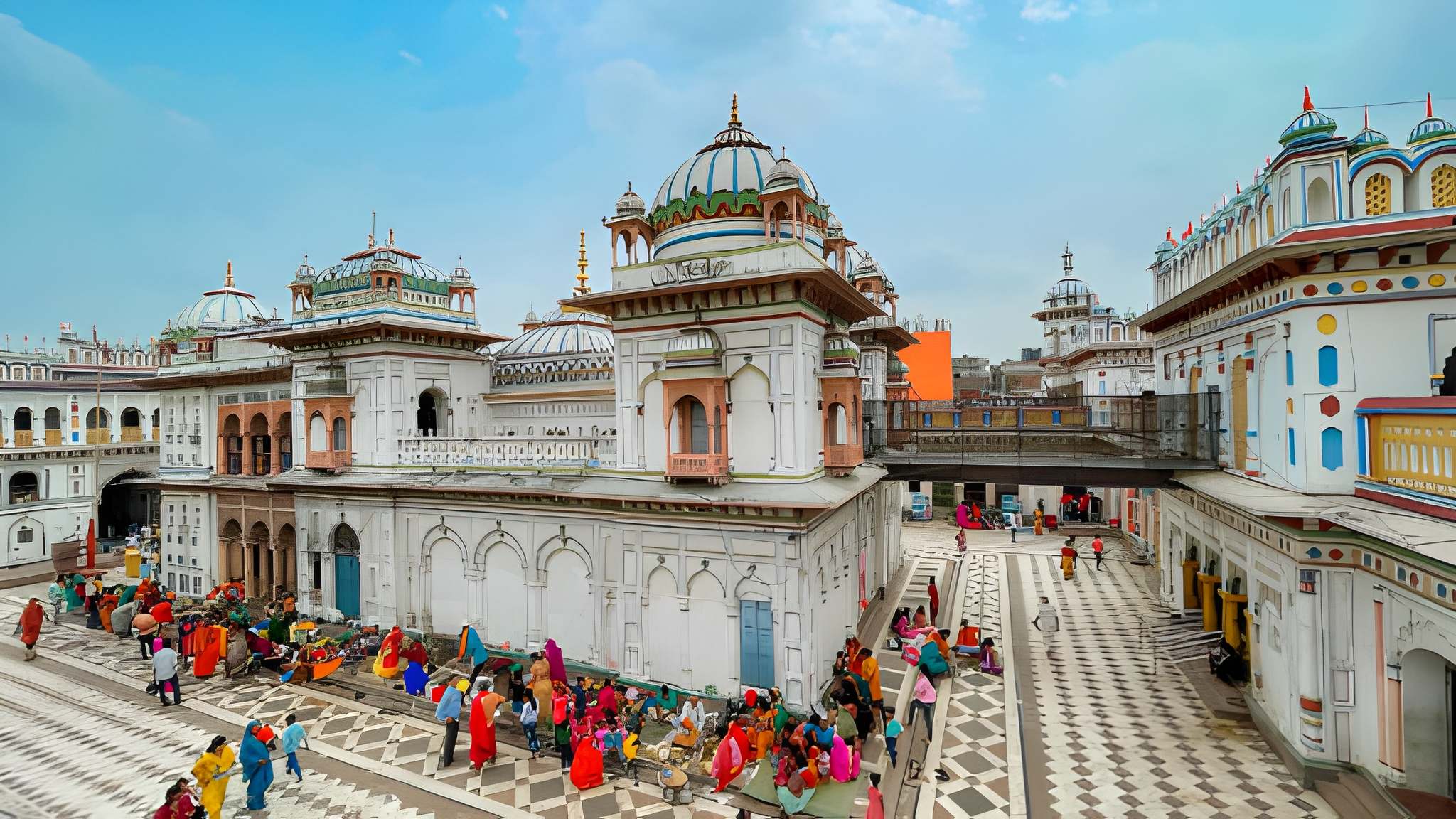
Most travelers searching for hotels in Janakpur start with a simple assumption: the closer to Janaki Mandir, the better. It makes sense since less walking means easier access to darshan with maximum convenience. But proximity in Janakpur isn't quite that straightforward.
The reality is more nuanced. "Near" means different things here than it might in larger cities. A hotel 400 meters from the temple might involve navigating narrow pedestrian lanes during peak hours, while a property 2 kilometers away could offer a quieter 8-minute auto-rickshaw ride. The temple zone operates almost continuously: bells before dawn, crowds throughout the day, and ceremonies into the evening.
This guide helps you decide the right distance for your stay. Not which property to book, but how close "close enough" actually is based on your travel style, physical needs, and whether you're visiting during a festival or quieter period. Because in Janakpur, the best location isn't always the closest one.
When locals in Janakpur describe something as "near" the temple, they're usually thinking in walking time rather than kilometers. A 10-minute walk feels close. A 15-minute walk is moderate. Anything requiring a vehicle is considered "outside the immediate area."
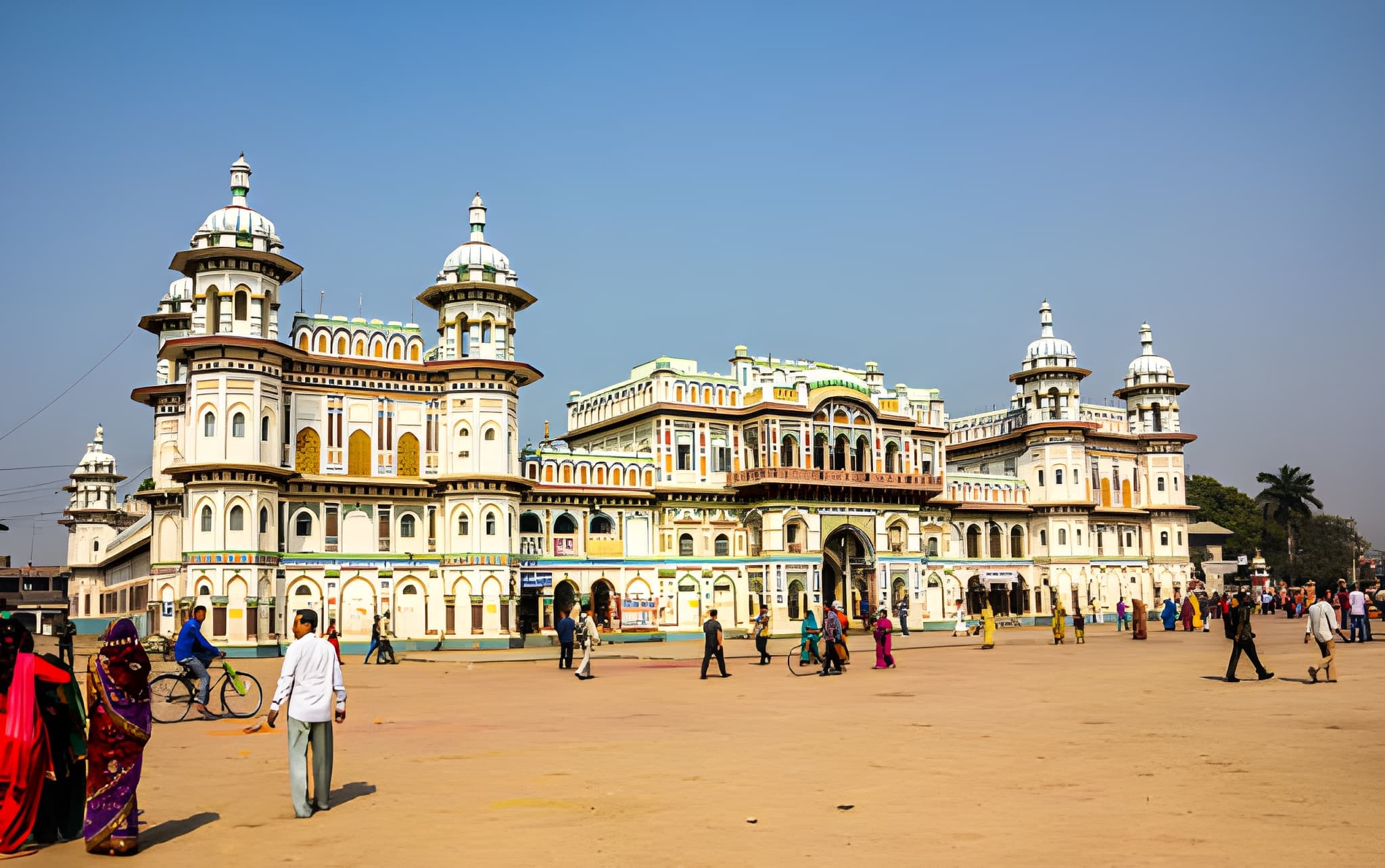
But these aren't straight-line distances on a map. The roads surrounding Janaki Mandir include narrow lanes where two people walking side by side barely fit, wider approach roads that accommodate both pedestrians and vehicles, and several routes that involve navigating around market areas. What Google Maps shows as 300 meters might take 8-10 minutes to walk during morning rush, or 4 minutes late at night when foot traffic clears.
The pedestrian flow patterns also shift dramatically throughout the day. Early morning (4:30-7:00 AM) sees a steady stream of pilgrims heading to the first aarti. Mid-morning quiets down. Evening (5:30-8:00 PM) brings another surge. During these peak windows, navigating the immediate temple zone means constantly moving around people, pausing for groups, and adjusting your pace to the crowd.
Understanding this rhythm helps set realistic expectations. A property 200 meters from the temple entrance might offer genuine convenience, or it might mean your entire stay revolves around managing noise and foot traffic. Distance alone doesn't tell the full story.
Staying ultra-close to Janaki Mandir offers clear advantages for certain travelers. If you're attending early morning darshan, being able to walk out your door at 5:00 AM without arranging transport eliminates a significant friction point. For elderly pilgrims or anyone with limited mobility, reducing daily walking distance can make the difference between a comfortable visit and a physically exhausting one.
The convenience extends beyond just morning prayers. Multiple daily visits become effortless when the temple is a 5-minute walk away. No vehicle coordination, no waiting for auto-rickshaws, no concern about timing. You can visit for aarti, return to rest, and head back for evening darshan without the logistics becoming burdensome.
But this convenience comes with trade-offs that matter more the longer you stay. Temple bells begin well before sunrise (around 4:30 AM), and while they're culturally significant and spiritually meaningful, they're also loud and persistent. The loudspeaker announcements carry clearly into the surrounding blocks. If you're a light sleeper or traveling with young children who need predictable sleep schedules, this can become wearing after the first night.
The foot traffic throughout the day creates a different kind of ambient noise. Constant conversation, vendors calling out, groups navigating the lanes, which is the sound of a living pilgrimage site, but it rarely quiets down completely. Even outside peak hours, the area maintains a baseline level of activity that some travelers find energizing, and others find exhausting.
During major festivals like Vivah Panchami or Ram Navami, these factors amplify significantly. What's manageable background noise during normal periods can become overwhelming when crowd sizes multiply. The immediate temple zone transforms into a constant flow of humanity, and finding moments of quiet becomes nearly impossible.
Moving slightly farther from the temple, say roughly 1.5 to 3 kilometers, shifts the experience considerably. The ambient noise drops noticeably. You're far enough that temple bells become background sound rather than alarm clocks, and the foot traffic outside your window decreases substantially. For families with children or anyone staying more than two nights, this often translates directly into better sleep quality and more comfortable downtime between temple visits.
Vehicle access becomes simpler as well. Properties in this range typically have easier parking, clearer approach roads, and fewer pedestrian-heavy zones to navigate. An auto-rickshaw from your accommodation to the temple entrance usually takes 6-10 minutes during normal periods, and drivers are familiar with these routes. The streets are quieter, making arrivals and departures less chaotic.
The trade-off, of course, is that spontaneous temple visits require slightly more planning. You can't simply walk out your door on impulse. You need to arrange transport or budget 20-25 minutes for walking. This matters most during early morning aarti, when you're coordinating timing more carefully, or if you're someone who prefers multiple short visits throughout the day rather than fewer extended ones.
Traffic timing becomes a consideration you didn't have to think about before. During the aarti periods, the approach roads to the temple zone slow down noticeably. A 7-minute drive during off-peak hours can stretch to 15-20 minutes when everyone is heading toward darshan simultaneously. It's not gridlock, but it's noticeable.
During festivals, this distance often works better than being ultra-close. You maintain reasonable access to the temple while avoiding the most intense concentration of crowds and noise. A 10-minute vehicle ride during Vivah Panchami is still manageable, but you're returning each evening to a property where rest is actually possible. For multi-day festival visits, this balance often proves more sustainable.
There's a threshold where proximity stops being convenient and starts creating unexpected difficulties. It's different for every traveler, but the pattern is common enough to be worth understanding.
The immediate temple zone, which roughly covers a 200-300 meter radius, experiences almost no downtime. Pilgrims arrive throughout the day and evening, vendors operate during all active hours, and the lanes maintain steady foot traffic from before dawn until late evening. If you're staying here for a single night, this immersion in the pilgrimage atmosphere might feel exciting and authentic. By day three or four, many travelers report feeling overstimulated and tired.
The constant movement creates challenges beyond just noise. Privacy becomes limited when your windows open directly onto pedestrian routes. The sense of having personal space diminishes. You're always in the experience, with little buffer or separation.
This affects different travelers in different ways. Young solo travelers often adapt easily and appreciate being at the center of activity. Families with children frequently struggle, as kids need downtime and predictable quiet periods that are hard to maintain in the immediate temple zone. Couples seeking some balance between spiritual experience and comfortable accommodation often find the 24/7 intensity wearing.
The expectation gap matters too. Many properties market themselves as "near temple" or "walking distance to Janaki Mandir," and they're not wrong, but travelers sometimes picture something quieter than reality delivers. Understanding that "near the temple" means "in an active pilgrimage zone" helps set appropriate expectations. It's not a criticism of the area; it's simply the nature of staying at the heart of a living religious site.
Rather than searching for a universal "right" distance, it actually helps to consider what matters most for your specific situation.
For travelers with limited walking tolerance, the calculation often comes down to this: how much daily physical strain can you reasonably manage versus how much sleep disruption can you tolerate?
Staying within 300-400 meters minimizes the walking component almost entirely. You're never far from the temple, and each visit requires minimal physical exertion. But you're also accepting that the early morning temple bells will wake you, and the ambient noise will be consistent throughout your stay. If you're someone who sleeps deeply despite noise, or if reducing walking distance is the overwhelming priority, ultra-close proximity makes sense.
The alternative, staying 5-8 minutes away by vehicle, requires coordinating transport but often results in better rest quality. For travelers spending three or more days in Janakpur, accumulating good sleep across multiple nights sometimes matters more than eliminating a 10-minute auto-rickshaw ride. The decision hinges on your individual noise sensitivity and how much your mobility limitations affect daily movement.
Children's sleep schedules usually become the deciding factor. Young children need predictable quiet periods, and their rest patterns can deteriorate quickly in noisy environments. Starting at 4:30 AM with temple bells, then managing daytime naps amid continuous foot traffic, tends to create challenges that compound over several days.
Most families find that staying 8-12 minutes from the temple by vehicle offers the best balance. Children can maintain normal sleep patterns, parents get genuine downtime between temple visits, and the accommodation feels like a retreat rather than an extension of the pilgrimage environment. The slightly longer travel time to the temple is usually a minor inconvenience compared to well-rested children and calmer family dynamics.
Safety considerations also shift in crowded lanes near the temple. Keeping track of children in densely packed pedestrian areas requires constant vigilance, and the narrow walkways leave little margin for kids to move freely. Staying slightly away typically means more space, clearer sightlines, and lower stress for parents managing young travelers.
When you're in Janakpur for a brief visit, like for darshan and a quick exploration, maximizing efficiency often outweighs comfort concerns. A single night of temple bells and ambient noise is manageable, and the time saved by staying close adds up across a compressed itinerary.
For short stays, being within 400-500 meters typically makes sense. You can visit the temple multiple times without logistical overhead, spend less total time on transport coordination, and make the most of limited hours. The trade-offs that become significant over three or four days matter less when you're only sleeping there once or twice.
Arrival and departure logistics also favor closer proximity for short visits. Less travel time from your accommodation to the temple means fewer moving parts to coordinate when you're working with a tight schedule.
This might be the most dramatic difference in how distance affects your experience. During normal periods, staying 300 meters from Janaki Mandir means consistent noise and crowds, but nothing overwhelming. During Vivah Panchami, the time when the city's population swells considerably, that same 300-meter proximity puts you in the middle of intensified crowds, extended noise hours, and significantly reduced personal space.
Festival visitors often discover that staying 10-15 minutes away proves far more comfortable than they anticipated. You're still close enough to participate fully in all ceremonies and events, but you're returning each evening to a property where rest is actually achievable. The crowd density in the immediate temple zone during major festivals exceeds what most travelers expect, and having some physical separation helps maintain energy across multiple festival days.
The flip side: if you're attending specifically for the festival atmosphere and want maximum immersion in that experience, ultra-close proximity delivers exactly that. It's not comfortable in the conventional sense, but it's culturally immersive in a way that staying farther away isn't. The "right" choice depends entirely on what you're optimizing for.
After weighing all these factors, here's the framework that tends to work:
Closer makes sense when: You're attending primarily for darshan, have limited mobility that makes walking difficult, are staying only 1-2 nights, sleep deeply regardless of noise, or specifically want to be immersed in the pilgrimage atmosphere throughout your stay.
A short drive works better when: You're traveling with children, staying 3+ days, are noise-sensitive or need quality sleep to function well, are visiting during a major festival, or want some separation between temple visits and personal downtime.
During festivals, distance matters more: The intensity of crowds and noise near the temple zone increases dramatically during events like Vivah Panchami. What feels manageable during normal periods often becomes overwhelming during festival times. Staying 10-15 minutes away maintains access while preserving rest quality.
There's no universal right answer: Your comfort tolerance for noise, your physical mobility, your travel companions, and your purpose for visiting all influence what "close enough" actually means. A location that's ideal for an elderly pilgrim making a once-in-a-lifetime visit might be exhausting for a family spending a week in Janakpur. Neither choice is wrong as they're solving for different priorities.
The goal isn't to stay as close as possible to Janaki Mandir. It's to stay close enough to access the temple comfortably while maintaining the rest quality and personal space that makes your entire visit sustainable and enjoyable.
So, remember that:
0-500m (walking distance): Best for elderly pilgrims or those attending early morning aarti, but expect temple bells from 4:30 AM, continuous foot traffic, and vendor activity throughout the day.
5-10 minutes by vehicle: Balances temple accessibility with quieter nights and easier parking. This is ideal for families with children or travelers staying multiple days.
During festivals, staying 10-15 minutes away often provides better rest without losing access, as crowds intensify noise and congestion near the temple zone.
Once you've decided on the right distance from Janaki Mandir for your stay, you can compare suitable accommodation options in our complete Hotels in Janakpur accommodation guide.